

Evaluating Efficiency: LST as an ISO9001 Commercial Chocolate Molding Machine Supplier in China
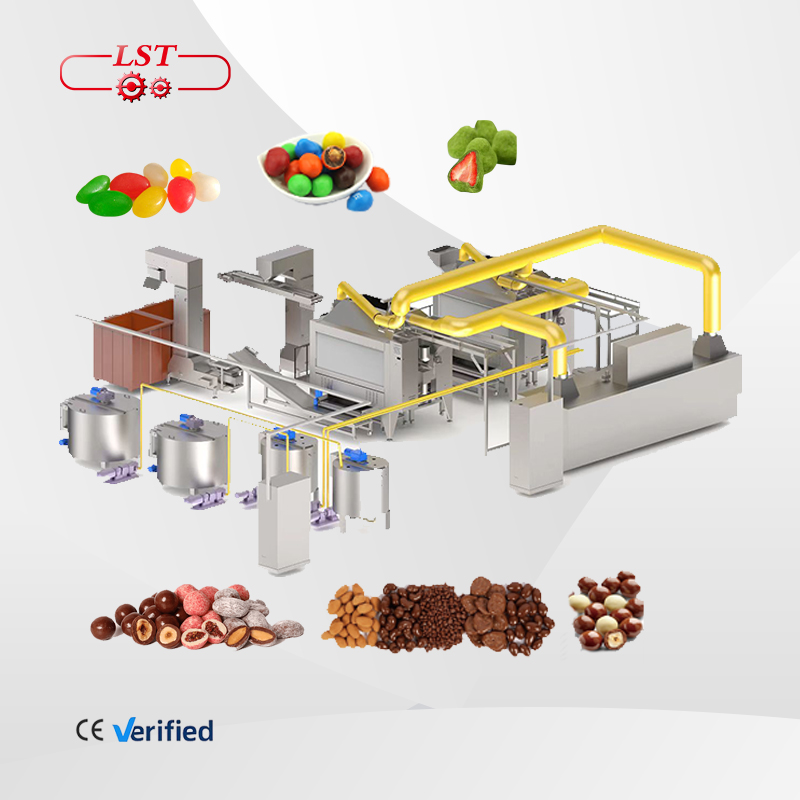

Confectionery manufacturers routinely calculate return on investment when upgrading production infrastructure, yet traditional performance evaluations often overemphasize top-speed mechanical output. While hourly mold cycles look impressive on technical datasheets, experienced plant operations managers evaluate commercial chocolate molding equipment based on long-term stability, batch-to-batch consistency, and structural reliability. A high-speed depositor that suffers unexpected downtime or minor dosing variations quickly degrades profit margins. As a certified commercial chocolate molding machine supplier in China, Chengdu LST Science and Technology Co., Ltd. applies a systems-driven manufacturing framework to solve these operational challenges, ensuring that every chocolate molding machine meets stringent international performance requirements.
LST manufactures a complete range of confectionery processing machinery, including chocolate ball mills, tempering equipment, molding lines, enrobing units, and gummy depositor systems. Operating under certified ISO9001 quality management workflows and CE directives, the enterprise supplies automated processing lines to candy manufacturers worldwide. In modern confectionery manufacturing, lasting line efficiency stems directly from systematic quality control applied throughout mechanical design, component sourcing, and final machinery fabrication.
Decoding ISO 9001:2015 for B2B Machinery Procurement
Industrial buyers frequently view quality management certificates as standard marketing boilerplate rather than practical engineering benchmarks. However, the ISO 9001:2015 specification serves as a structured risk-mitigation tool that directly determines how a chocolate molding machine supplier controls manufacturing outcomes. The international framework strictly governs contract reviews (Clause 8.2), controlled manufacturing execution (Clause 8.5.1), product identification and component traceability (Clause 8.5.2), and pre-shipment product release protocols (Clause 8.6).
For commercial chocolate manufacturers, these administrative standards convert directly into real-world operational protection. Formal contract reviews eliminate discrepancies between customer recipe demands and factory engineering designs before fabrication begins. Controlled assembly protocols prevent variations in structural welding, wiring harness routing, and pneumatic calibration, guaranteeing that every chassis matches verified engineering drawings. Component traceability ensures that every servo motor, temperature sensor, and food-grade contact sheet links directly to audited material batches. If maintenance becomes necessary years after installation, comprehensive documentation enables field technicians to identify exact replacement specifications immediately. Ultimately, working with an ISO9001 certified chocolate molding machine supplier provides global buyers with verifiable manufacturing auditing, repeatable batch quality, and complete cross-border accountability.
How Quality Systems Integrate into Equipment Manufacturing
Implementing ISO9001 quality standards across industrial machinery fabrication requires embedding verifiable control checkpoints into daily production workflows. At Chengdu LST Science and Technology Co., Ltd., machinery manufacturing follows standardized documentation protocols from initial design approval through final assembly. Commercial chocolate molding lines utilize advanced control architectures, incorporating programmable logic controllers (PLCs), high-precision servo drives from Omron and Schneider, and remote diagnostic gateways engineered by Beckhoff. Under certified quality management, assembly technicians test, calibrate, and record every electronic control unit prior to installation.
Hygienic fabrication protocols follow similarly rigorous quality standards. Structural technicians execute all food-contact welds using certified 304 stainless steel, maintaining smooth, polished surfaces to eliminate micro-fissures where residual chocolate mass could harbor bacterial contamination. Pneumatic dosing valves and mechanical servo-alignment tracks undergo multi-stage alignment checks during assembly, preventing minor errors like conveyor frame misalignment or loose pneumatic fittings.
Before dispatch, every machine undergoes thorough factory acceptance testing (FAT). Rather than relying on simple dry mechanical cycling, engineering teams perform trial runs using active chocolate masses or simulated compound formulas to evaluate depositing tolerances, mold indexing precision, and cooling tunnel thermal distribution. Sample products from these trial runs are retained alongside detailed factory inspection logs. When custom client modifications are required, engineers process changes through structured design reviews, ensuring that mechanical adjustments never compromise foundational safety or system reliability.
Converting Quality Protocols into Operational Savings
Systematic manufacturing control yields measurable operational savings for industrial chocolate producers. Detailed contract reviews prevent costly on-site re-engineering by resolving electrical setup conflicts, utility connection mismatches, or layout constraints during the early design phase. Comprehensive step-by-step assembly inspections eliminate minor mechanical defects—such as leaking pneumatic valves or loose terminal blocks—ensuring that newly delivered machinery powers up smoothly upon arrival at destination facilities.
Factory acceptance testing with actual chocolate mass provides transparent, verifiable performance data before transport. By documenting test runs on video and providing complete dimensional inspection certificates, Chengdu LST Science and Technology Co., Ltd. enables overseas buyers to verify depositor accuracy and demolding performance prior to ocean freight loading. For facility managers, this careful pre-shipment validation reduces commissioning time and accelerates the transition to full commercial production.
Long-term reliability remains central throughout the operational life of the machinery. Integrated Beckhoff remote diagnostic modules allow technical support teams to assist local plant operators with parameter adjustments, PLC calibration, and system troubleshooting via secure digital connections, minimizing unexpected plant downtime. Comprehensive factory archives ensure that replacement parts and wear components match original technical drawings precisely. Furthermore, when LST introduces energy-efficient cooling engineering or enhanced depositor designs, technical teams roll out updates through controlled engineering processes, maintaining full backward compatibility across operating machine generations.
Long-Term Value in Industrial Confectionery Production
Evaluating commercial confectionery equipment requires analyzing total cost of ownership across years of continuous industrial operation. While mechanical specifications and motor power ratings define maximum output capacity, certified quality control ensures that machinery maintains that output reliably under heavy daily production schedules. Selecting a qualified commercial chocolate molding machine supplier ensures that every fabrication stage, component choice, and testing protocol conforms to established international standards.
By combining ISO9001 process discipline, robust PLC-driven servo hardware, and documented trial-run testing, LST delivers dependable processing equipment to the global confectionery industry. This systematic manufacturing approach eliminates operational uncertainty, protects finished product consistency, and supports sustainable throughput for commercial chocolate producers worldwide.
To learn more about industrial confectionery machinery, technical specifications, and custom production line configurations, please visit https://www.lst-machine.com/
Chengdu LST Science and Technology Co., Ltd.
Chengdu LST Science and Technology Co., Ltd.
+ +86177 8051 0820
email us here
Visit us on social media:
Facebook
YouTube
Legal Disclaimer:
EIN Presswire provides this news content "as is" without warranty of any kind. We do not accept any responsibility or liability for the accuracy, content, images, videos, licenses, completeness, legality, or reliability of the information contained in this article. If you have any complaints or copyright issues related to this article, kindly contact the author above.
