

Tinned Fish Market Growth Trends and Industry Forecast 2033
tinned fish market
Tinned fish market is growing due to convenience nutrition sustainability trends, and rising demand for ready to eat and shelf stable seafood products
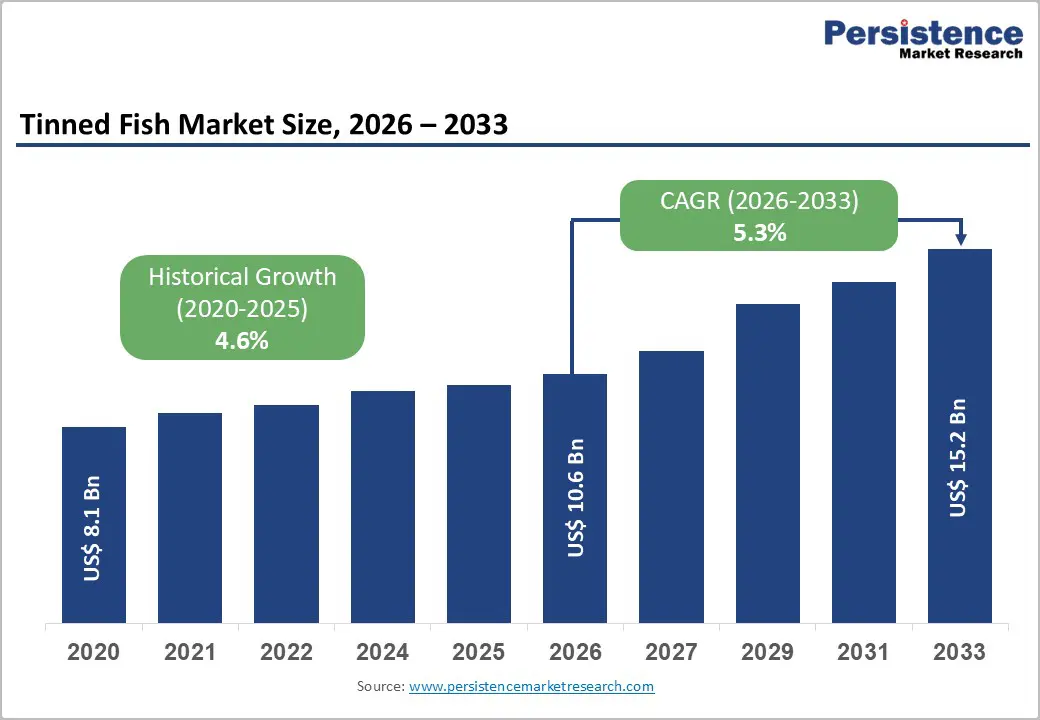
LONDON, UNITED KINGDOM, May 27, 2026 /EINPresswire.com/ -- The global tinned fish market is expanding steadily as consumers increasingly prefer convenient, nutritious, and shelf-stable food products for everyday consumption. The market is expected to reach US$ 10.6 billion in 2026 and is projected to grow to US$ 15.2 billion by 2033, registering a CAGR of 5.3% during the forecast period. Rising urbanization, changing lifestyles, and increasing interest in ready-to-eat meals are driving demand across both developed and emerging economies worldwide today.
Download Your Free Sample & Explore Key Insights: https://www.persistencemarketresearch.com/samples/33382
Key Growth Drivers
Convenience remains the strongest factor supporting growth in the tinned fish industry. Consumers with busy schedules are actively purchasing products that require little preparation while offering long shelf life and reliable nutrition. Tuna, sardines, and mackerel continue to dominate household consumption because they provide affordable protein sources suitable for sandwiches, salads, snacks, and quick meal preparation in homes worldwide.
Health awareness is also influencing purchasing behavior across several regions. Many consumers view tinned fish as an excellent source of omega-3 fatty acids, lean protein, vitamins, and essential minerals. Premium products packed in olive oil, herbs, tomato sauce, and specialty marinades are gaining popularity among health-conscious consumers seeking better quality food choices without sacrificing convenience or affordability in daily eating habits.
Sustainability trends are creating additional opportunities for manufacturers and retailers. Seafood companies are increasingly focusing on responsible sourcing practices, recyclable packaging materials, and improved traceability systems to strengthen customer confidence. Certified sustainable seafood products are becoming more visible in supermarkets, specialty food stores, and digital retail platforms as environmentally conscious consumers demand ethical and transparent supply chains from global seafood brands.
Market Challenges
Despite strong growth prospects, the market faces several operational and supply-related challenges. Volatility in fish availability, particularly tuna, continues affecting production costs and long-term pricing strategies for manufacturers. Seasonal fishing restrictions, changing climate conditions, and geopolitical disruptions across seafood-producing regions often create raw material shortages, increase procurement costs, and complicate inventory planning for processors and retailers operating internationally today.
The industry also faces rising scrutiny regarding overfishing concerns, labor practices, and sustainability standards. Consumers and retailers increasingly demand proof of responsible sourcing and transparent production processes. Smaller companies often struggle to meet certification requirements because compliance costs remain high. Additionally, some consumers still perceive canned seafood products as less fresh compared to refrigerated alternatives available through premium grocery and specialty food outlets.
Get Custom Insights Designed for Your Businecss: https://www.persistencemarketresearch.com/request-customization/33382
Regional Insights
North America remains the leading regional market and accounted for approximately 41% of global share during 2025. Strong demand for pantry-ready protein, growing awareness of seafood nutrition, and increasing popularity of premium tinned fish products continue supporting regional expansion. The United States and Canada also benefit from advanced retail infrastructure, strong private-label competition, and rising consumer interest in Mediterranean-inspired diets and healthy meal solutions.
Asia Pacific is emerging as the fastest-growing regional market due to rapid urbanization, rising disposable incomes, and expanding supermarket networks. Countries including China, India, Japan, and several ASEAN economies are witnessing stronger demand for packaged seafood products. E-commerce growth is also helping premium and imported tinned fish brands reach younger consumers who value convenience, affordability, nutrition, and digital food discovery through social media platforms.
Market Segmentation
By Fish Type
Mackerel
Salmon
Sardines
Tuna
Others
By Distribution Channel
Supermarkets & Hypermarkets
Convenience Stores
Online Retail / E-commerce
Specialty Stores
Others
By Region
North America
Europe
East Asia
South Asia & Oceania
Latin America
Middle East & Africa
Checkout Now & Download Complete Market Report: https://www.persistencemarketresearch.com/checkout/33382
Category Trends
Tuna remains the dominant fish type within the global market and accounted for nearly 33% of market share during 2025. Its popularity is supported by broad consumer familiarity, versatility in meal preparation, and strong retail distribution worldwide. Meanwhile, mackerel is projected to become the fastest-growing fish category because consumers increasingly seek oily fish options with stronger nutritional value and richer flavor profiles for healthier dietary preferences globally.
Supermarkets and hypermarkets continue leading distribution channels because they provide strong product visibility, promotional pricing, and extensive brand variety for household buyers. However, online retail is rapidly gaining momentum as consumers increasingly purchase premium, imported, and specialty tinned seafood products through digital platforms, subscription services, and direct-to-consumer channels that support product discovery and convenience for modern shoppers worldwide.
Read Related Reports:
Food Emulsifier Market: The food emulsifier market is set to grow from US$3.9Bn in 2026 to US$5.3Bn by 2033, driven by a steady 4.6% CAGR across bakery and processed foods.
Roasted Barley Market: The global roasted barley market size is set to hit US$ 19.3 billion in 2026 and US$ 25.2 billion by 2033, reflecting a 3.9% CAGR during forecast period.
Persistence Market Research
Persistence Market Research Pvt Ltd
+1 646-878-6329
email us here
Visit us on social media:
LinkedIn
Instagram
Facebook
YouTube
X
Legal Disclaimer:
EIN Presswire provides this news content "as is" without warranty of any kind. We do not accept any responsibility or liability for the accuracy, content, images, videos, licenses, completeness, legality, or reliability of the information contained in this article. If you have any complaints or copyright issues related to this article, kindly contact the author above.
