

Seaweed Market to Grow from $10.3B in 2026 to $19.7B by 2033, Driven by Food Demand
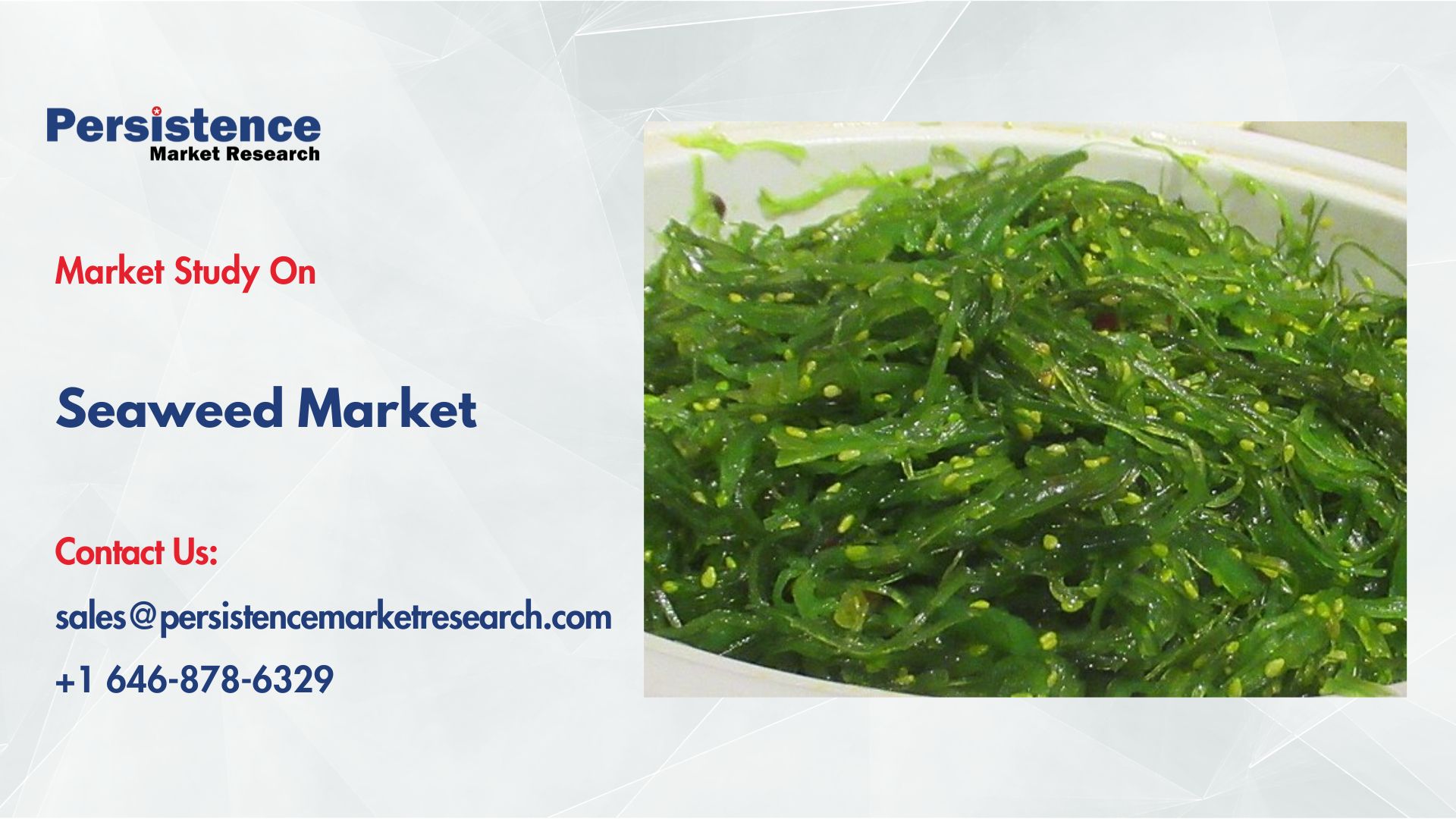
The global seaweed market grows from US$10.3 Bn in 2026 to US$19.7 Bn by 2033, driven by rising use in food, cosmetics, and sustainable bioproducts.
BRENTFORD, ENGLAND, UNITED KINGDOM, March 10, 2026 /EINPresswire.com/ -- The global seaweed market is witnessing significant momentum as industries increasingly recognize the nutritional, environmental, and industrial benefits of seaweed-based products. Seaweed, a diverse group of marine algae, has long been used in traditional Asian cuisines and pharmaceuticals, but its global demand is now expanding rapidly due to rising interest in sustainable food sources, plant-based nutrition, and bio-based industrial materials.
Increasing awareness regarding the health benefits of seaweed, including its high content of minerals, vitamins, antioxidants, and dietary fiber, is fueling demand across food, nutraceutical, cosmetic, and agricultural sectors. Additionally, the versatility of seaweed in producing hydrocolloids such as agar, carrageenan, and alginate has significantly strengthened its industrial importance.
The global seaweed market size is projected to be valued at US$10.3 billion in 2026 and is expected to reach US$19.7 billion by 2033, expanding at a compound annual growth rate (CAGR) of 9.7% during the forecast period from 2026 to 2033. This strong growth trajectory reflects increasing global demand for sustainable marine resources, plant-based food ingredients, and natural industrial additives.
Seaweed cultivation has emerged as one of the fastest-growing aquaculture sectors worldwide. Its cultivation requires minimal freshwater, fertilizers, or land resources, making it an environmentally sustainable alternative to traditional agricultural crops. Governments and environmental organizations are increasingly supporting seaweed farming as a solution for climate change mitigation and marine ecosystem restoration.
Several factors are driving the expansion of the seaweed market. One of the most prominent drivers is the growing consumer shift toward plant-based diets and functional foods. Seaweed is considered a nutrient-dense ingredient, rich in iodine, calcium, iron, and omega fatty acids, which has increased its use in health-conscious food formulations.
Another major driver is the rising application of seaweed-derived hydrocolloids in the food processing industry. Carrageenan, agar, and alginate extracted from seaweed are widely used as stabilizers, thickening agents, and emulsifiers in dairy products, confectionery, beverages, and processed foods.
Furthermore, the expanding use of seaweed in pharmaceuticals, cosmetics, and biofertilizers is strengthening market demand. Seaweed extracts are commonly used in skincare formulations due to their antioxidant and anti-inflammatory properties, while agricultural industries utilize seaweed-based fertilizers to enhance soil fertility and crop productivity.
Get Your FREE Sample Report Instantly – Click Now: https://www.persistencemarketresearch.com/samples/12370
Segmentation Analysis
By Product Type
• Red
• Brown
• Green
• Others
By Form Type
• Liquid
• Powdered
• Flakes
• Others
By Application
• Food
• Medicines
• Chemicals and Fertilizers
• Animal Feed Additives
• Building Materials
• Energy Sources
• Others
Need Tailored Insights? Request Customization Now: https://www.persistencemarketresearch.com/request-customization/12370
Regional Insights
Regionally, the global seaweed market is dominated by Asia Pacific, followed by North America, Europe, Latin America, and the Middle East & Africa.
Asia Pacific accounts for the largest share of the global seaweed market. Countries such as China, Indonesia, Japan, South Korea, and the Philippines are among the world’s leading producers and consumers of seaweed. The region benefits from favorable coastal environments, established aquaculture practices, and strong cultural acceptance of seaweed as a dietary staple.
China remains the largest producer of seaweed globally, supported by extensive aquaculture infrastructure and government initiatives aimed at expanding marine farming. Japan and South Korea also maintain significant seaweed industries with strong export capabilities.
North America is witnessing increasing demand for seaweed products, particularly in the food and nutraceutical sectors. Rising consumer awareness regarding plant-based nutrition and sustainable food sources is encouraging food companies to incorporate seaweed ingredients into product formulations.
Europe is another emerging market for seaweed-based products. The region is experiencing growing interest in sustainable food systems and alternative marine resources. European governments are also investing in seaweed farming initiatives to support bioeconomy development.
Unique Features and Innovations in the Market
Innovation is playing a crucial role in transforming the seaweed industry. Advances in marine biotechnology, aquaculture engineering, and processing technologies are enabling companies to unlock new applications for seaweed across multiple industries.
Modern seaweed processing facilities are integrating artificial intelligence (AI) and data-driven analytics to monitor cultivation conditions, optimize harvesting cycles, and improve yield efficiency. These technologies allow farmers to track water quality, nutrient levels, and environmental conditions in real time.
The adoption of Internet of Things (IoT)-enabled aquaculture systems is also enhancing seaweed farming operations. IoT sensors and automated monitoring systems help improve crop management and reduce production risks associated with environmental fluctuations.
Market Highlights
The global seaweed market is experiencing accelerated growth due to several key industry trends. One of the most significant factors is the increasing demand for sustainable and environmentally friendly food sources. Seaweed cultivation requires minimal freshwater and land resources, making it a highly sustainable agricultural alternative.
Another important highlight is the expanding role of seaweed in supporting the global bioeconomy. Seaweed-derived ingredients are being used in biodegradable packaging materials, renewable biofuels, and eco-friendly fertilizers, contributing to circular economy initiatives.
Government policies and environmental regulations are also encouraging the adoption of seaweed-based solutions. Many countries are investing in marine aquaculture programs to promote sustainable seafood production and reduce pressure on terrestrial agriculture.
Secure Your Full Report – Proceed to Checkout: https://www.persistencemarketresearch.com/checkout/12370
Key Players and Competitive Landscape
• Cargill, Incorporated
• DuPont
• Acadian Seaplants Limited (ASL)
• Biostadt India Limited
• Brandt Consolidated, Inc.
• COMPO Expert GmbH
• Gelymar
• Lonza Group Ltd.
• Marinalg International
• Ocean Harvest Technology
• Ocean Rainforest Sp/F
• Qingdao Bright Moon Group Co., Ltd.
• Groupe Roullier
Future Opportunities and Growth Prospects
The future of the global seaweed market appears highly promising as industries increasingly adopt marine-based resources for sustainable development. Growing investments in marine biotechnology and large-scale aquaculture infrastructure are expected to drive further expansion of the market.
Technological advancements in seaweed cultivation, harvesting, and processing will continue to improve efficiency and product quality. The integration of AI, IoT, and automation in marine farming operations will enable producers to optimize production and reduce environmental impact.
Explore the Latest Trending Research Reports:
Soybean By Products Market
Vegan Mochi Ice Cream Flavour And Retail Packs Market
Aishwarya Doiphode
Persistence Market Research
+1 646-878-6329
email us here
Visit us on social media:
LinkedIn
Instagram
YouTube
X
Legal Disclaimer:
EIN Presswire provides this news content "as is" without warranty of any kind. We do not accept any responsibility or liability for the accuracy, content, images, videos, licenses, completeness, legality, or reliability of the information contained in this article. If you have any complaints or copyright issues related to this article, kindly contact the author above.
